
Cheyenne County Probate Court Role
Probate jurisdiction in Cheyenne County sits in the District Court. The Cheyenne County District Court page lists probate and administration of estates, guardianships, and conservatorships among the court's case types. No separate Cheyenne County probate court page was located in the official sources reviewed. That means estate files, probate petitions, fiduciary appointment orders, guardianship files, conservatorship files, and related document requests should start with the District Court and the Clerk of the District Court.
The local court is at Cheyenne County Courthouse, PO Box 646, 212 E. Washington, St. Francis, KS 67756. The court clerk phone is 785-332-8850, and the fax is 785-332-8851. Cheyenne County probate records may appear as public district court case information in Kansas CaseSearch, but case documents that are not downloadable must be requested from the court in writing when the clerk or Kansas court rules require it.
Cheyenne County District Court
Probate jurisdiction in the District Court
PO Box 646
212 E. Washington
St. Francis, KS 67756
785-332-8850
Fax: 785-332-8851
Cheyenne County Probate Record Types
Cheyenne County probate records can cover more than a will. Estate administration may include a petition, the will if filed, notices, orders appointing a fiduciary, letters testamentary or letters of administration, inventories, creditor claims, accountings, orders of sale, and final settlement papers. A will becomes part of a probate estate file when it is submitted to the court in connection with a probate case.
Guardianship and conservatorship cases are also within the District Court's probate-related work. A guardianship concerns personal care or decision-making for an adult or minor. A conservatorship concerns financial management for a protected person. These records can include private medical, financial, minor, or protected-person information, so public access may be narrower than access to an ordinary estate docket.
- Estate case files: petitions, wills, notices, orders, claims, inventories, accountings, and final settlements.
- Small estate affidavits: simplified Kansas Judicial Council form route for qualifying personal property transfers.
- Guardianships: petitions and orders for personal care authority for a minor or adult.
- Conservatorships: appointment and accounting records for financial management of a protected person.
- Care and treatment matters: district court jurisdiction exists, but these are not ordinary public probate lookup records.
Cheyenne County Small Estates
Kansas Judicial Council provides a form titled Small Estates Affidavit - K.S.A. 59-1507b. The research notes that the form can be used to obtain transfer of certain personal property to a decedent's successor in interest without letters of administration or letters testamentary when the estate subject to probate is within the current statutory limit. Because dollar limits can change, the safest path is to review the current Judicial Council form and instructions before relying on the cap.
Small estate affidavits do not replace every Cheyenne County probate filing. They are aimed at a narrower set of transfers. If real estate, disputes, creditor issues, contested heirs, fiduciary appointment, or court orders are involved, a formal probate case may still be needed. The Clerk of the District Court can identify local filing requirements, but legal advice about whether a small estate affidavit is proper should come from counsel or a qualified self-help source.
The Kansas Judicial Council small estates affidavit page identifies the K.S.A. 59-1507b form for Kansas small estate use and explains the source document to check before relying on a simplified transfer.
Search Cheyenne County Probate Records
Start with Kansas CaseSearch for public district court probate case information when the case may be online. Search by case number if known, or by party name when the estate, petitioner, fiduciary, or protected person name is the only clue. Public case data can show case number, case type, parties, attorney names, assigned judge, hearing dates, and events, but it does not guarantee downloadable probate documents.
When a Cheyenne County probate file is older, restricted, sealed, not digitized, or missing from the public portal, contact the Clerk of the District Court. Kansas court guidance says courthouse terminals remain an access path for public court records, and documents must be requested in writing when they are not available online. For county agency records outside the court file, the Cheyenne County KORA form is a separate route, but it is not a substitute for court case-file access.
- Search Kansas CaseSearch for public Cheyenne County probate case information.
- Use the courthouse terminal or clerk counter when public online access does not show the case.
- Ask the Clerk of the District Court about document copies, certified copies, older files, and written request rules.
- Use Kansas Judicial Council forms for statewide probate forms, including small estate affidavit materials.
- Expect redaction or denial for sealed, minor-related, medical, care and treatment, or protected-person information.
Cheyenne County Probate File Fields
A probate case file is built around the person or estate affected by the proceeding and the fiduciary authority requested from the court. The public docket may show only a short summary, while the full court file can include petitions, wills, notices, orders, inventories, accountings, and closing papers. Access to the file depends on Kansas public-access rules and any case-specific restriction.
| Field | What It Shows |
|---|---|
| Case number | The District Court number assigned to the probate, estate, guardianship, or conservatorship case. |
| Decedent or protected person | The estate subject, ward, conservatee, or person connected to the proceeding. |
| Filing date | When the petition, affidavit, or case was opened. |
| Case type | Estate, guardianship, conservatorship, small estate, care and treatment, or related probate category. |
| Petitioner | The person asking the court to open the case or grant relief. |
| Fiduciary | Personal representative, executor, administrator, guardian, or conservator if appointed. |
| Attorney and judge | Attorney of record and assigned judge or magistrate when shown. |
| Docket events | Petition filed, order entered, notice issued, letters issued, inventory filed, claim filed, accounting filed, final settlement, or case closed. |
| Restrictions | Medical details, minor information, protected-person facts, sealed materials, or redacted identifiers. |
Cheyenne County Probate Process
Probate work usually starts by deciding whether a court case is needed and, if so, what kind. A family may need to present a will, ask for appointment of a personal representative, give notice to heirs or creditors, file an inventory, handle claims, and seek final settlement. A guardianship or conservatorship follows a different path because the court is asked to protect a living person or that person's property.
Cheyenne County probate records should be read as court-management records, not as a substitute for legal advice. The docket may show that letters were issued or a fiduciary was appointed, but it may not explain whether a bank, title company, heir, creditor, or agency will accept the document presented. Certified copies may be needed for real-world transactions after the court enters an order.
- Identify whether the estate needs formal probate, a small estate affidavit, or another simplified Kansas procedure.
- Search for any existing Cheyenne County probate case in Kansas CaseSearch.
- Contact the Clerk of the District Court for filing requirements, local copy fees, and certified-copy procedures.
- File the correct petition, affidavit, or related document in District Court when court involvement is needed.
- Give required notice to heirs, creditors, or interested parties if the proceeding requires it.
- Ask the court to appoint or recognize a fiduciary when authority is needed.
- File inventories, accountings, closing documents, or reports required by Kansas probate procedure and court orders.
Cheyenne County Probate Terms
Probate records use short legal labels that can change how a file should be read. These terms appear often in estate, will, guardianship, and conservatorship matters in Kansas district court.
- Testator
- The person who made a will.
- Executor
- A person named in a will to carry out estate duties after court authority is granted.
- Intestate
- Dying without a valid will, which can change who has priority under Kansas probate law.
- Personal representative
- A broad term for the person authorized to administer an estate.
- Guardianship
- A court case about personal care or decision-making authority for an adult or minor.
- Conservatorship
- A court case about managing money or property for a protected person.
Cheyenne County Probate Forms Fees
Kansas Judicial Council publishes statewide probate form resources. The research source inventory includes the small estate affidavit page and a probate forms publication page. Cheyenne County filing fees, certified-copy fees, and any local probate filing details were not captured in the research file, so the current amount should be confirmed with the Clerk of the District Court before filing or ordering copies.
The Kansas Judicial Council probate forms publication page is a statewide form source for Kansas probate records and proceedings. Statewide forms help users identify document types, but Cheyenne County filing and copy questions still route through the District Court clerk.
| Item | Where to Confirm |
|---|---|
| Probate petition filing fee | Cheyenne County Clerk of the District Court, 785-332-8850 |
| Guardianship or conservatorship filing fee | Cheyenne County Clerk of the District Court, 785-332-8850 |
| Certified probate copy | Cheyenne County Clerk of the District Court, 785-332-8850 |
| Small estate affidavit form | Kansas Judicial Council K.S.A. 59-1507b form page |
| County agency KORA copies outside court files | Cheyenne County open-records form fee estimate, not the court probate file |
Restricted Cheyenne County Probate Records
Not every probate-related file is open for broad public copying. Estate dockets and some estate documents may be public, but guardianship, conservatorship, care and treatment, medical, minor, financial, and sealed materials can be restricted or redacted. Kansas court rules and case-specific orders control access. A public search result should not be treated as permission to obtain every document in the file.
Sealed records do not appear as ordinary public lookup material. Expungement is more common in criminal contexts, but the same practical rule applies to restricted court records: the public portal is not a full view of nonpublic files. When a probate record includes protected addresses, Social Security numbers, financial account numbers, medical facts, or minor names, those details should be withheld or redacted before public release.
Access caution: Cheyenne County probate case information may be public while specific filings in the same case remain restricted, sealed, or available only to parties, attorneys, or authorized requesters.
Probate filings can also intersect with family history and vital records. For marriage and divorce certificate paths tied to family proof, see Cheyenne County marriage and divorce records. For court-file copies, the Clerk of the District Court is the local record counter.
Estate Debts and Federal Bankruptcy
Most Cheyenne County probate records are state district court files. Federal bankruptcy is separate. The U.S. Bankruptcy Court for the District of Kansas does not handle Cheyenne County probate estates as a local probate court, but it can matter when debt, insolvency, or a party's bankruptcy case affects property or claims. A bankruptcy case is searched through federal systems, not Kansas CaseSearch.
The U.S. Bankruptcy Court for the District of Kansas is the federal bankruptcy source assigned to the probate manifest image.
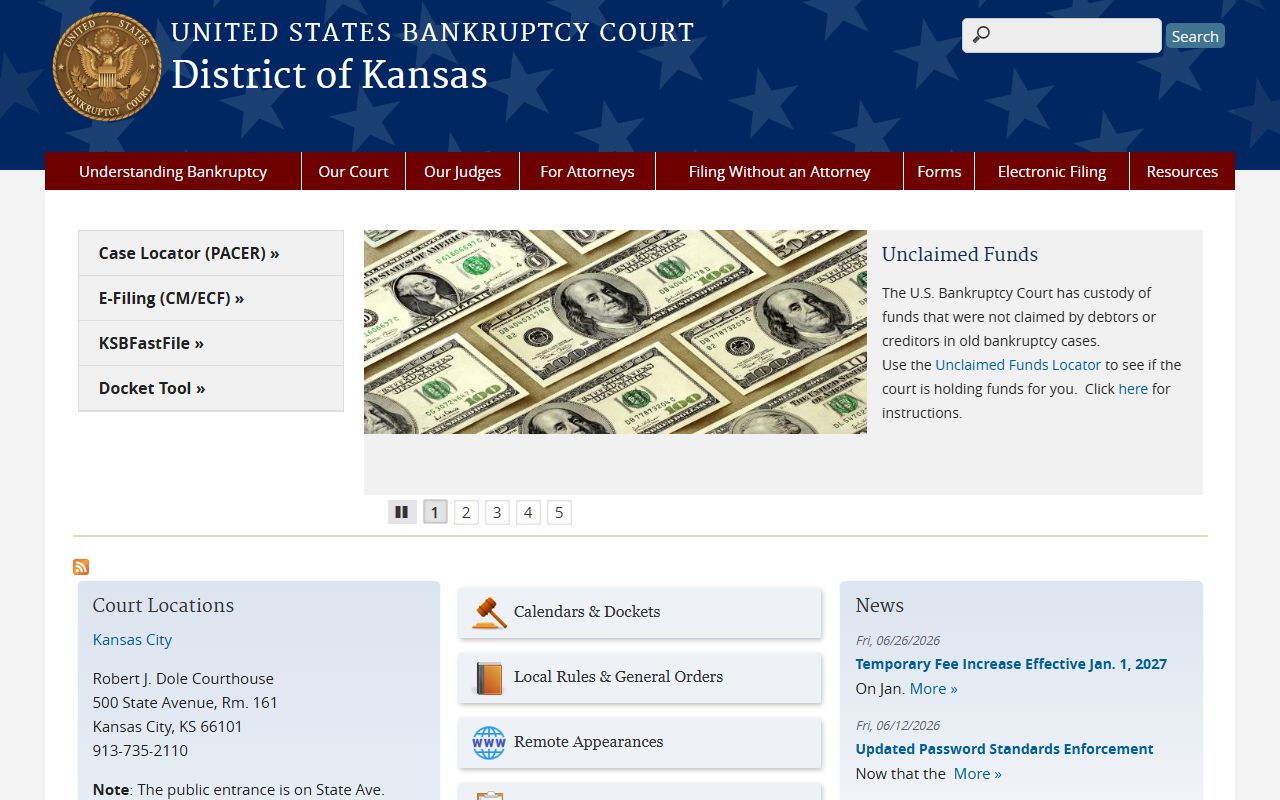
The distinction helps keep Cheyenne County probate court files separate from federal bankruptcy records that may affect debts or property.
Note: A Kansas probate docket and a federal bankruptcy docket are different records, even when they involve the same person, estate, creditor, or property.