
Cheyenne County Criminal Case Files
A criminal court record is the court file for a prosecution. In Cheyenne County, that file is held through the District Court when the case is filed in state district court. It is not the same as an arrest report, jail roster entry, sheriff incident report, KBI criminal-history report, or federal prosecution file. The criminal case record begins when a complaint, information, citation-linked charge, or other charging paper creates a court case. From there, the docket and file track court action until disposition and any post-judgment events.
Cheyenne County District Court is the local trial court for criminal cases filed in district court. Kansas district courts have general original jurisdiction over civil and criminal cases. Municipal court is separate and handles city ordinance violations, often including minor municipal traffic matters inside city limits. A city case may later reach district court on appeal, but the original municipal docket is not the same file as a district court criminal case.
The Kansas criminal history record search portal is the image source for the statewide criminal-history system that must be distinguished from Cheyenne County criminal court records.
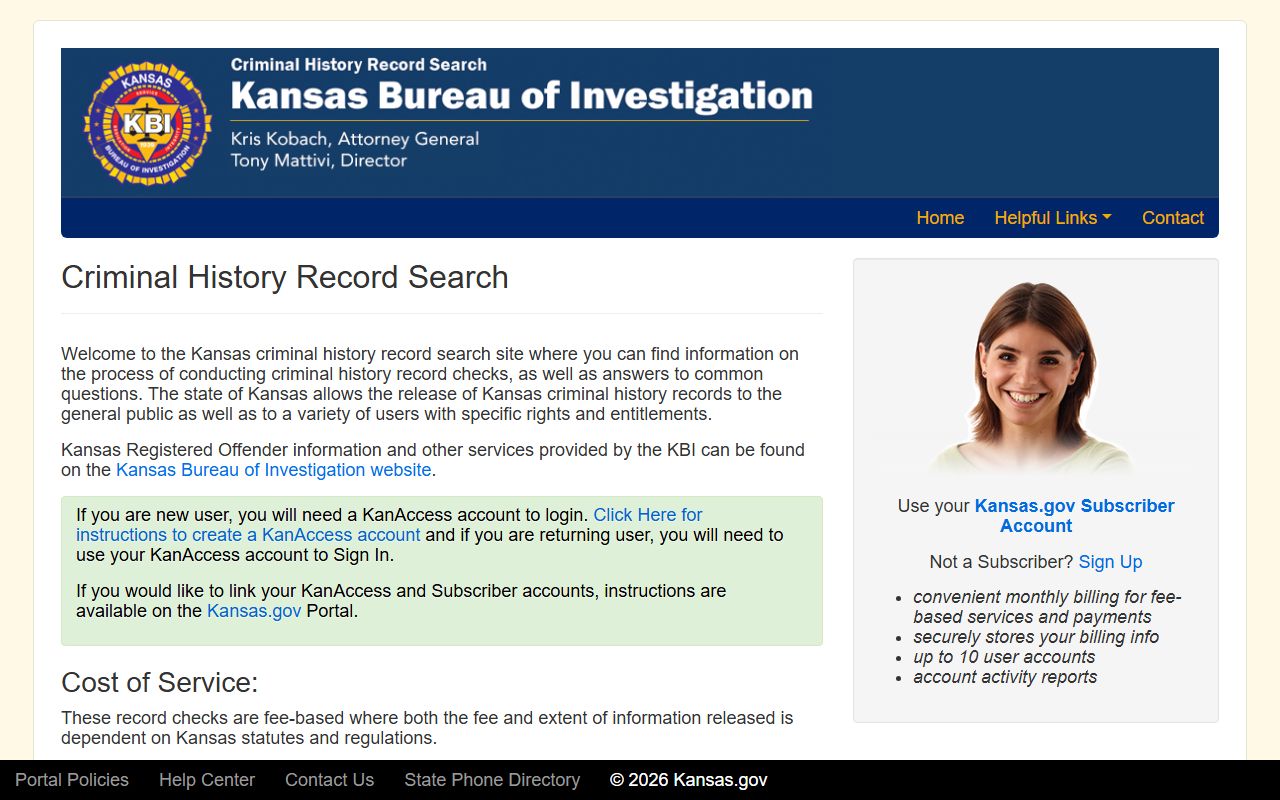
That state repository can support background checks, but a Cheyenne County criminal court record is still a court case file with case-specific events and documents.
Search Cheyenne County Criminal Court Records
The first online path is Kansas CaseSearch. Search by case number if available, or by defendant name when the case number is unknown. A public criminal case result may show the case number, case type, parties, attorney names, assigned judge, hearing dates, docket events, disposition, and financial information when public. CaseSearch is not a complete document vault. Kansas court guidance says documents from a case must be requested in writing when they are not available online.
For documents, certified copies, older files, terminal access, and questions about a Cheyenne County criminal case, contact the Clerk of the District Court at the Cheyenne County Courthouse, PO Box 646, 212 E. Washington, St. Francis, KS 67756. The phone is 785-332-8850 and fax is 785-332-8851. For the charge-filing and diversion side of a prosecution, the County Attorney is a separate office and does not replace the clerk as the case-file custodian.
- Search Kansas CaseSearch by case number, defendant name, business name, or citation if the case is citation-linked.
- Open the matching case and review the public docket for charges, hearings, assigned judge, and status.
- Check the disposition field and sentencing events before treating a charge as an outcome.
- Ask the clerk for written document access when a complaint, journal entry, sentencing order, or certified copy is needed.
- Use KBI criminal-history search for central repository background information rather than assuming one case file is complete statewide history.
Cheyenne County Criminal Case Flow
A criminal case file grows as the prosecution moves through the court. The charge is the accusation. The arraignment is a hearing where charges are addressed and a plea may be entered. Pretrial entries can show motions, bond conditions, continuances, discovery issues, notices, and negotiated settings. A case may end by dismissal, diversion, plea, trial verdict, or another disposition. Sentencing follows a conviction or plea and can include probation, jail or prison terms, fines, costs, restitution, and compliance conditions.
Case flow: Charges Filed › Arraignment › Pretrial and Motions › Plea or Trial › Disposition › Sentencing
| Stage | What Happens |
|---|---|
| Charges filed | The prosecutor files a complaint, information, or citation-linked charge that opens or updates the case. |
| Arraignment | The defendant appears, the charge is addressed, and a plea may be entered. |
| Pretrial and motions | The docket may show bond orders, motions, continuances, discovery settings, and negotiation events. |
| Plea or trial | The case is resolved by plea, verdict, dismissal, diversion, or another court action. |
| Disposition | The court records the outcome for each charge or for the case. |
| Sentencing | The record can show sentence, probation, restitution, fines, costs, and compliance terms. |
What Cheyenne County Criminal Records Show
Cheyenne County criminal court records can show the official court history of a prosecution. They may include charging documents, appearances, bond orders, motions, plea entries, trial entries, dispositions, sentencing documents, probation orders, restitution, fines, court costs, and later compliance or collection events. They can also show amendments or dismissals, which is why the charge list must be read with the disposition. For a close look at filed counts and amendments, the separate Cheyenne County court charge records page is the more focused route.
| Field | What It Shows |
|---|---|
| Case number | The official identifier for the Cheyenne County district criminal case. |
| Defendant | The person charged in the criminal case. |
| Case type | The criminal classification or docket category used by the court. |
| Charges | Counts, statutes, offense descriptions, severity levels, amendments, or dismissals when public. |
| Attorneys | Prosecutor and defense counsel information when shown. |
| Judge | The assigned judge or magistrate. |
| Bond and conditions | Release conditions, bond events, or appearance requirements when entered publicly. |
| Plea | Guilty, not guilty, no contest, or other plea entries when recorded. |
| Motions and orders | Requests for court action and judge rulings. |
| Disposition | Convicted, dismissed, diverted, acquitted, amended, or other charge outcome. |
| Sentence | Probation, confinement, fines, restitution, court costs, and other court-ordered terms. |
Charges vs Convictions
A charge is an accusation filed in court. A conviction is an outcome after a guilty plea, no contest plea accepted by the court, or trial verdict. A criminal court record may show charges that were dismissed, amended, reduced, diverted, or resolved without conviction. Reading only the first charge line can give a false picture of the case. Always read the final disposition, sentence, and later orders.
| Point | Charge | Conviction |
|---|---|---|
| Meaning | An allegation filed by the prosecutor or linked to a citation. | A court outcome after plea or verdict. |
| Timing | Appears early in the case. | Appears after adjudication or accepted plea. |
| Record risk | May be amended, dismissed, or diverted. | May lead to sentence, probation, fines, restitution, or custody. |
| Best field to verify | Count, statute, filing date, and amendment history. | Disposition, journal entry, sentence, and later expungement orders. |
Cheyenne County Attorney and Diversion
Cheyenne County's prosecutor is the County Attorney, not a district attorney office. The official County Attorney page lists Leslie Beims, Attorney at Law, PO Box 762, 212 E Washington Street, St. Francis, KS 67756. The office phone is 785-332-2363, fax is 888-511-7049, and email is attorney@cncoks.us. Office hours are Monday-Friday, 8 a.m. to noon, and Thursday also 1 p.m. to 5 p.m.
The County Attorney's diversion policy is important to criminal court records because diversion can affect disposition. The policy describes diversion as a prosecutor-approved supervised performance program before trial. Successful completion results in dismissal with prejudice. Failure can result in revocation and trial based on facts stipulated in the diversion agreement. The policy says diversion may be considered for a variety of misdemeanors, fish and game violations, and felonies, but it lists major disqualifiers, including certain DUI history, serious felonies, domestic violence diversion within five years, burglary to a dwelling, felony sex offenses, certain felony drug offenses, crimes involving death, crimes involving firearms or deadly weapons, and cases where Kansas law prohibits diversion.
Cheyenne County Attorney
PO Box 762
212 E Washington Street
St. Francis, KS 67756
785-332-2363
Fax: 888-511-7049
Email: attorney@cncoks.us
Public Criminal Access Rules
Public access to Cheyenne County criminal court records depends on Kansas court access rules, the status of the case, and whether a filing is restricted. Kansas Supreme Court Rule 106B governs public access and confidentiality for district court electronic case records. The Kansas Open Records Act applies to many public records, but a court case document should be requested through the court process when it is part of a district court file.
The K.S.A. 21-6614 expungement statute is the image source for conviction, arrest-record, and diversion expungement authority affecting Cheyenne County criminal court records.
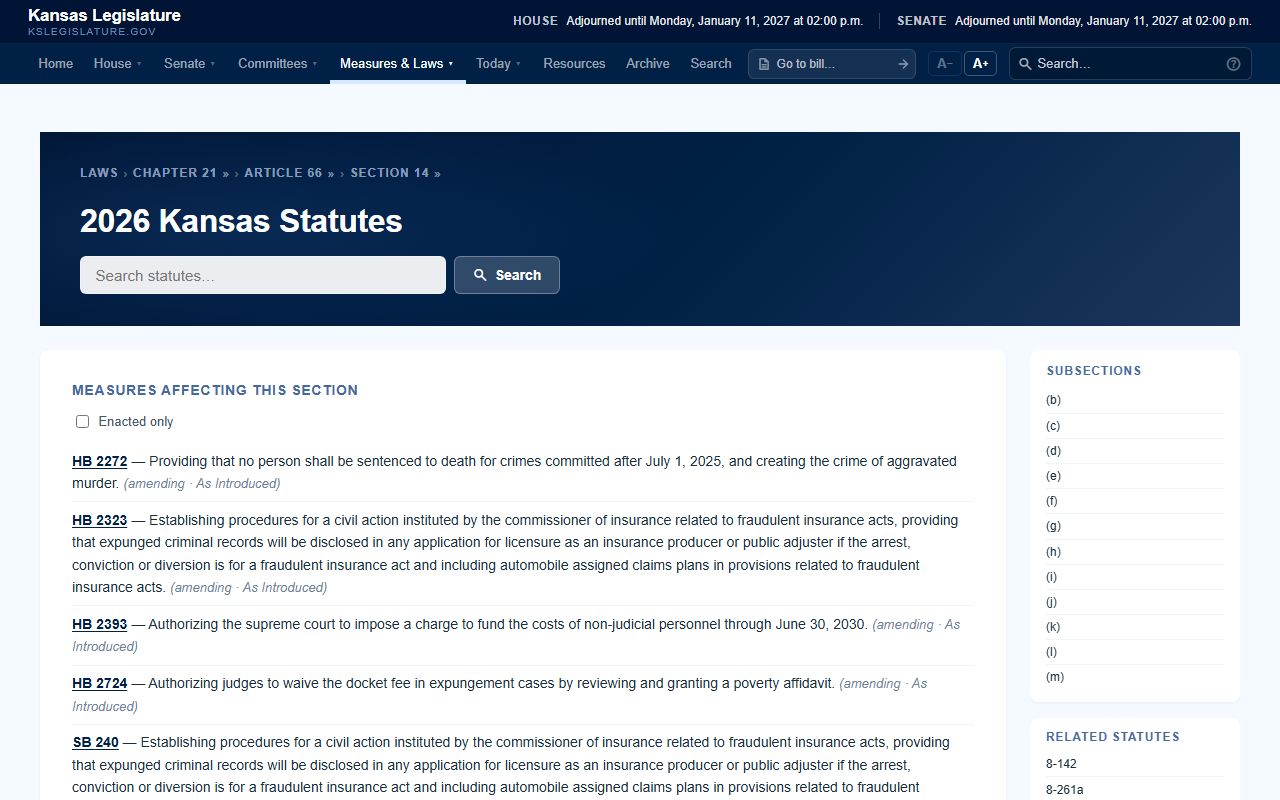
That statute matters after a qualifying case outcome because expungement can restrict public access without making every agency memory vanish.
The K.S.A. 22-2410 arrest-record expungement statute is the image source for Kansas arrest-record expungement provisions tied to criminal records.
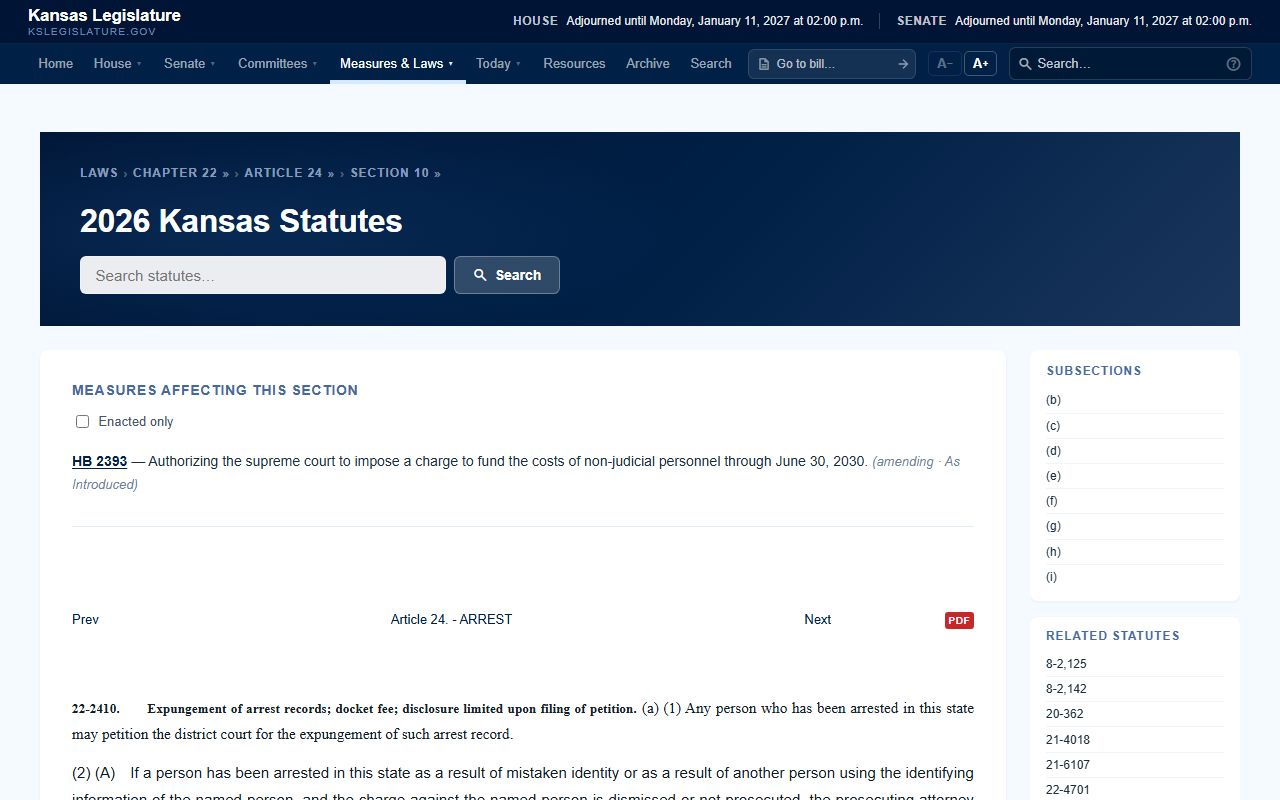
That arrest-record statute is distinct from the court case file, but it can affect public access after the court grants relief.
Sealed vs Expunged Records
Sealing and expungement are often confused. A sealed record is hidden from ordinary public view by rule or court order. An expunged record is restricted under the applicable statute and order after a petition is granted. Kansas expungement does not mean every government record is physically destroyed. Some agencies and later legal proceedings may still have access under statutory exceptions. A person seeking relief usually files in the court connected to the arrest, conviction, or diversion.
| Point | Sealed | Expunged |
|---|---|---|
| Public visibility | Not available through ordinary public access while sealed. | Public access is restricted after the court grants expungement. |
| How it happens | By statute, rule, or judge's order. | Usually by petition under a Kansas expungement statute. |
| Cheyenne County starting point | Ask the Clerk of the District Court about the case number and access status. | Confirm the case, filing requirements, fee questions, and petition route with the clerk. |
| Limits | Authorized users may still see some sealed material. | Some agencies or later proceedings may still use the record under exceptions. |
Restricted Cheyenne County Criminal Records
Juvenile offender records and child-related cases are restricted compared with ordinary adult criminal files. Sealed records, expunged records, certain care or treatment matters, protected addresses, minor names, medical facts, financial account numbers, and Social Security numbers should not appear as ordinary public information. Protective-order material and safety-sensitive filings may also be restricted or redacted. The public portal should not be treated as a complete juvenile or sealed-record search.
For current custody status after an arrest, use jail or custody channels, not the criminal case docket alone. For criminal-history background information, use the KBI system. For full filed motions, orders, or sentencing documents, use the Clerk of the District Court. For federal charges, federal warrants, and federal detention issues, use federal court and law-enforcement sources. Each record system answers a different question.
Note: A criminal case can be public in part while specific documents or data fields remain restricted.
Federal Criminal Case Distinction
Federal criminal cases arising in Kansas are not Cheyenne County criminal court records. They are handled through the U.S. District Court for the District of Kansas, federal prosecutors, federal clerks, federal public terminals, and PACER. The District of Kansas is the federal trial court for federal criminal cases, federal civil cases, and other federal jurisdiction matters in Kansas. The U.S. Attorney's Office for the District of Kansas is the federal prosecution source, and federal custody can involve the U.S. Marshals Service or federal prison systems.
The U.S. District Court for the District of Kansas homepage is the image source for federal criminal cases that are separate from Cheyenne County criminal court records.
The federal district court image is included to keep state district court searches separate from federal criminal proceedings.
The U.S. Attorney's Office for the District of Kansas is the image source for the federal prosecutor distinction in criminal case records.
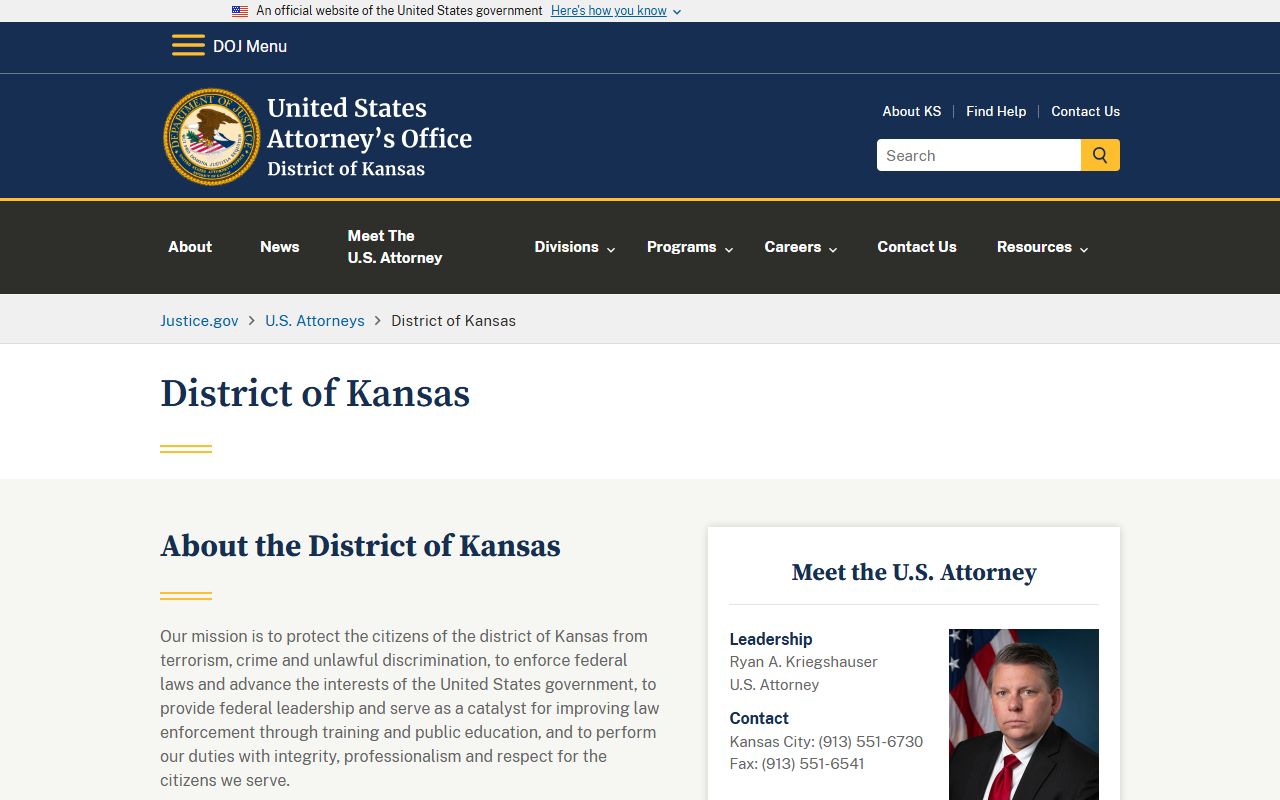
Federal prosecution sources may explain federal charges, but they do not replace the Cheyenne County District Court record for state cases.
Legal Research Is Not the Case File
Free legal research tools can help locate opinions, statutes, or secondary docket material, but they are not the official Cheyenne County criminal case file. CourtListener was identified in the research as a free legal-research alternative for opinions and some docket material, but it is not the official federal docket and it is not the Kansas district court clerk. For Cheyenne County criminal case records, start with Kansas CaseSearch and the local Clerk of the District Court.
The CourtListener legal research portal is the image source for a non-official research tool that should not be confused with Cheyenne County criminal court records.
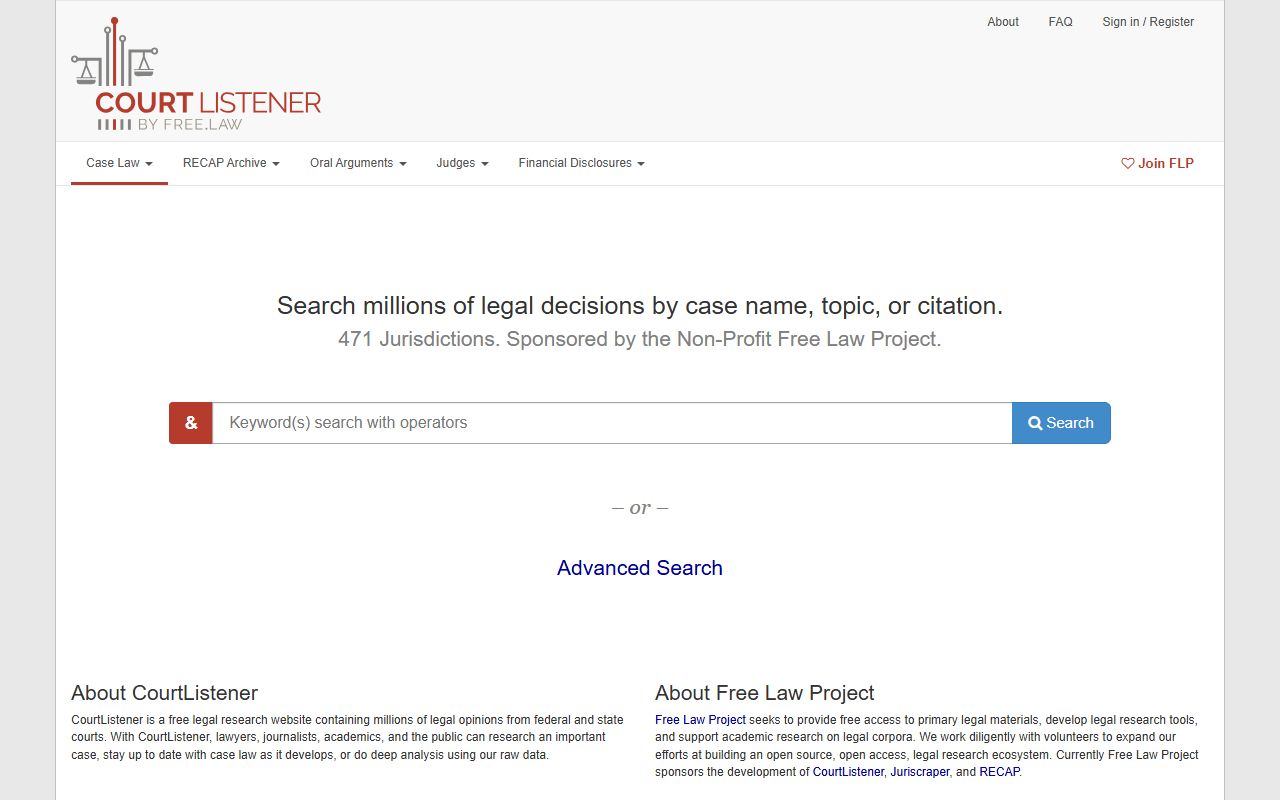
That distinction keeps legal research, federal records, state criminal history, and the local criminal court case file in their proper lanes.